Combined contraceptive pill: Everything you need to know

Medically reviewed by
Dr Zoe MillerLast reviewed: 14 Sept 2025
If you’re considering using the combined contraceptive pill, you are not alone. It’s one of the most popular types of contraception in the UK and can offer added benefits beyond pregnancy prevention, such as lighter periods and improved skin.
However, with many different combined pills available, it can be difficult to know which one to choose or how they differ. Understanding how the pill works, its possible side effects, and who it is suitable for, can help you make a more informed decision.
This article will explain everything you need to know about the combined pill, including how to take it, how effective it is, and how it compares to the mini pill.
What is the combined pill?
The combined contraceptive pill, sometimes called "the pill", is a daily hormonal contraceptive that prevents pregnancy. It contains 2 artificial hormones, oestrogen and progesterone, which are similar to the natural hormones produced by the ovaries.
The combined pill is one of the most effective types of contraception when used correctly. It can also help manage certain health conditions linked to hormone levels.
How does the combined contraceptive pill work?
The combined pill prevents pregnancy in 3 key ways:
- Stops the ovaries from releasing an egg (ovulation).
- Thickens the mucus in the cervix, making it harder for sperm to reach an egg.
- Thins the lining of the womb, which makes it less likely that a fertilised egg can implant itself there.
When taken exactly as prescribed, the combined pill is over 99% effective. This means fewer than 1 in 100 people will get pregnant each year. With typical use, which includes missing pills occasionally because of things like sickness or forgetting to take them, the effectiveness is closer to 91%.
Types of combined pills and how they differ
There are several different types of combined contraceptive pill. All of them contain artificial versions of the hormones oestrogen and progesterone, but they vary in how the hormones are delivered and the balance of ingredients.
Combined contraceptive pill types include:
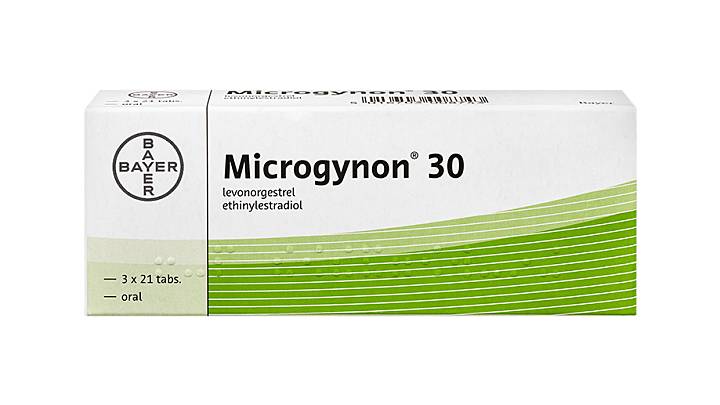
- Monophasic pills – Every pill in the strip contains the same dose of hormones. These are the most common types and include brands such as Microgynon and Rigevidon.
- Multiphasic pills – The hormone levels change throughout the cycle to more closely mimic natural changes. Examples include Logynon and Triregol.
- Everyday (ED) pills – Each pack contains both active and inactive pills. This helps you stay in the routine of taking a pill every day. Common examples are Microgynon ED and Logynon ED.
Popular combined pill brands
Some of the combined pill brands available through Asda Online Doctor include:
| Pill name | Active ingredients (type of artificial hormones) |
|---|---|
Yasmin (branded) Lucette (branded, generic equivalent to Yasmin) |
|
Gedarel (branded) Marvelon (branded) |
|
Microgynon (branded) Levest (branded, generic equivalent to Microgynon) |
|
Each type of combined pill works in the same way to prevent pregnancy, but the hormone balance, potential side effects, and additional benefits can vary.
The best option for you will depend on your health, preferences, and medical history. A doctor or pharmacist can advise on which pill may be most suitable.
How to take the combined pill
The most common type of combined pill is the monophasic pill, which is usually taken by:
- taking 1 pill every day for 21 days (until you finish your pill packet)
- having a 7-day break where you take no pills (which can also be shortened to 4 days if you prefer) – this can simulate a period by causing a bleed, but it’s not the same as a natural period
- starting your pill again, and following this cycle for as long as you want to prevent pregnancy with the combined pill
This is known as the 21:7 method or the traditional method.
It’s best to take your pill at the same time every day, though you can still take it within the same 24-hour period for it to be effective. Swallow your pill whole, with or without water and food. If you feel sick after taking the pill, especially in the first few months when this side effect is most likely, you may find it better to take it on a full stomach or with food.
This is not the only way to take a combined, monophasic pill. You can also choose to:
- Follow a continuous regime, where you take your pill packets back-to-back and have no breaks. This can stop bleeding altogether in some people, and may be beneficial for people who do not want to have periods. If you get breakthrough bleeding, you should take a 4-day break before restarting.
- Tricycling your pill, which means taking 3 packets back-to-back before having a shorter break of around 4 days.
Speak to your doctor if there’s a certain way you’d like to take your pill – they can help you take it properly so it’s effective and works for you.
There are also some other types of combined pills, which are taken slightly differently:
Phasic combined pills
If you take a phasic pill, there’ll be 2 or 3 different coloured pills in your packet. You must take your pills in the right order, and there will be arrows on the pill packet to help you keep track. These contain different levels of hormones to more naturally mimic your menstrual cycle. You’ll take your pills in the right order for 21 days before having a 7-day break, then repeating this process.
➤ Examples of phasic pills include Logynon or Synphase.
Everyday (ED) combined pills
ED pills work in exactly the same way as usual, though instead of taking a 7-day break from pills, you’ll take 7 placebo pills. This means you’re still taking a break from the hormones, but taking a placebo pill (with no hormones or active ingredient) can help some people remember to take their pill correctly. You must make sure you’re taking your active pills for 21 days in a row before taking the 7 placebo pills, which will be a different colour.
➤ Examples of ED pills include Microgynon ED and Logynon ED.
When to start taking the combined pill
Ideally, try to start taking the pill in the first 5 days of your cycle (this is the first 5 days of your period), as it will work straight away and you will not need extra protection against pregnancy.
If you start after day 5, you’ll need to use another type of contraception, such as condoms, until you’ve taken your pill for 7 days in a row. If you’ve got an irregular or short cycle, your doctor may also recommend using additional contraception for 7 days.
Zoely and Qlaira are the only exceptions to this. You must take them on the first day of your period to be protected against pregnancy straight away. If you start it at any other time, or have an irregular or short cycle, you’ll need to use another type of contraception for 7 days (Zoely) or 9 days (Qlaira).
What to do if you miss a pill
What to do when you miss a pill depends on when you miss your pill, such as how long it’s been or where in your pill packet you are, and what type of pill you’re taking. This table contains general guidance for what to do if you miss your pill, but it’s always best to check the patient information leaflet that comes with your specific pill to make sure. You can also check with a pharmacist or doctor if you’re worried about pregnancy.
| Scenario | What to do next |
|---|---|
1 or more pills missed in week 1 of your pill packet |
Take the missed pill, even if it means taking 2 in the same day. Use extra protection, like condoms, for 7 days (or 9 days for Qlaira). If you had unprotected sex during the last week, speak to a doctor or pharmacist, as there’s a chance of pregnancy. This chance is higher if you missed more than 1 pill or if you missed pills just after your pill-free break. |
1 or more pills missed in week 2 of your pill packet |
1 missed pill: Take the missed pill, even if it means taking 2 in the same day. Your protection should not be affected if you’ve taken your pill correctly for the last 7 days before your missed pill. More than 1 missed pill, or you’ve not taken your pill properly in the past 7 days: speak to a doctor or pharmacist, as there’s a chance of pregnancy. Use extra protection, like condoms, for 7 days (or 9 days for Qlaira). |
1 or more pills missed in week 3 if your pill packet |
If you’ve taken your pills correctly for the last 7 days, you can:
You can shorten a 7-day break if you want to start your next pill packet on your normal day. If you have not taken your pill correctly in the last 7 days and have had unprotected sex, you must follow option 1. You should also contact a healthcare professional and use additional protection for 7 days (or 9 days for Qlaira). |
Any pills missed in week 4 of your pill packet (for ED pills only) |
Week 4 pills are placebo (dummy) pills and are just there to help you remember to take your pill every day. If you miss any placebo pills, this will not affect your contraception. |
If you’re sick or have diarrhoea |
If you’re sick (vomit) up to 3 hours after taking your pill (or up to 4 hours for Qlaira or Zoely), take another pill straight away, then carry on taking your pill normally. If this continues, use another type of contraception until you’ve been able to take your pill for 7 days without vomiting. If you have severe diarrhoea that lasts longer than 24 hours, keep taking your pill, but use another type of contraception until you’ve been able to take your pill for 7 days without having diarrhoea. |
How to stop taking the combined pill
You can stop taking the combined pill at any time, and you do not need to wean yourself off it, but remember that as soon as you stop taking it, there’s a chance of pregnancy. Any side effects should go away within a few days to a few weeks, and you can expect your periods to return to how they were before taking it within 3 months or so. Most people can get pregnant within a year of stopping the combined pill.
Benefits of the combined pill
The combined contraceptive pill is not only a reliable form of birth control but also offers a number of health benefits. These may vary from person to person, but many people notice positive changes soon after starting the pill.
Benefits include:
✓ does not interrupt sex
✓ usually makes bleeding more regular, lighter, and less painful
✓ reduces the risk of cancer of the ovaries, womb, and colon
✓ can reduce symptoms of premenstrual syndrome (PMS)
✓ can sometimes improve acne
✓ may help protect against pelvic inflammatory disease (PID), although there is mixed evidence about this
✓ may lower the risk of fibroids, ovarian cysts and non-cancerous breast disease



No results found.
Please check your spelling or try another treatment name.
Combined pill side effects
Like all medicines, the combined contraceptive pill can cause side effects, although not everyone will experience them. Side effects are usually most noticeable when you first start taking the pill and often settle within the first few months.
Common side effects of the combined pill include:
- breakthrough bleeding or changes to your periods, especially in the first few months
- headaches
- feeling sick
- dizziness
- sore breasts
- raised blood pressure in a small number of people
Some people find that the pill improves symptoms linked to their periods, such as pain or headaches. If side effects continue after 3 months and are bothersome, speak to a doctor or pharmacist. They may suggest switching to a different combined pill or trying a tailored regimen, such as taking packs back to back without a break.
Myths about side effects
There is no clear evidence that the combined pill causes weight gain, and it’s also unlikely to affect sex drive. However, weight gain is still listed as a side effect for many different pill types, as it’s been reported by users. Most commonly, this is caused by water retention rather than fat gain, as oestrogen can increase the chances of this, especially in the first few months. This usually settles once your body gets used to the pill.
Weight gain could also simply be caused by natural fluctuations, as many people take the pill for years, and it’s normal for your body to fluctuate in weight. Progesterone is also known to affect your appetite, so if you eat more after starting the pill, this could cause weight gain, rather than as a side effect of the pill itself.
Combined pill risks and who should avoid it
Although the combined pill is safe for most people, there are some health risks linked to taking it. These risks are small, but it’s important to be aware of them before starting the pill. A doctor or pharmacist will always check your medical history and risk factors first.
Blood clots
The combined pill slightly increases the chance of developing a blood clot. This affects up to 1 in 1,000 people using combined hormonal contraception. Blood clots can lead to:
- a clot in the leg (deep vein thrombosis)
- a clot in the lung (pulmonary embolism)
- a heart attack
- a stroke
Cancer
Taking the combined pill can slightly raise the risk of breast cancer and cervical cancer. This increased risk returns to normal around 10 years after stopping the pill.
At the same time, the combined pill can lower the risk of other cancers, including:
- womb cancer
- bowel cancer
Research also suggests that taking the combined pill for at least 5 years can reduce the risk of ovarian cancer by roughly 29%.
Who should avoid the combined pill?
The combined pill is safe for many people, but it’s not suitable for everyone. A doctor or pharmacist will review your medical history before prescribing it.
You may be advised against taking the combined pill if you:
- smoke and are aged 35 or older
- have high blood pressure, heart disease, or a history of blood clots
- experience migraines with aura
- have or have had breast cancer, severe liver disease, or certain complications of diabetes
The combined pill can sometimes also help with heavy or painful periods, PMS, acne, endometriosis, and polycystic ovary syndrome (PCOS).
If you have recently given birth, had a miscarriage, or had an abortion, a doctor or pharmacist will advise you on when it is safe to start the pill again.
Combined pill vs mini pill: What is the difference?
The combined pill and the progesterone-only pill, also called the mini pill, are both effective forms of hormonal contraception. They work in similar ways but contain different hormones and are taken slightly differently.
The combined pill contains both oestrogen and progesterone. It mainly prevents pregnancy by stopping ovulation and also thickens cervical mucus and thins the womb lining. Brands such as Microgynon, Yasmin, and Rigevidon are available through Asda Online Doctor.
The mini pill contains only progesterone. Some types, such as Cerazette and Cerelle, mainly work by thickening cervical mucus, while others, such as Norgeston and Noriday, may also stop ovulation depending on the formulation. The mini pill is taken every day without a break.
Both types are over 99% effective with perfect use, but this drops to around 91% with typical use, which includes missing pills.
Key differences:
- the combined pill is not suitable if you smoke and are over 35, or have certain medical conditions
- the mini pill can be used when breastfeeding or if you cannot take oestrogen
- the combined pill can help with acne, PMS and heavy periods, while the mini pill may suit those who prefer not to have a withdrawal bleed
- neither pill protects against sexually transmitted infections, so condoms are still needed for STI protection
How effective is the combination pill?
The combined contraceptive pill is one of the most reliable forms of contraception when it’s taken correctly. With perfect use, fewer than 1 in 100 people will become pregnant in a year. This makes it more than 99% effective.
With typical use, which takes into account missed pills or delays in taking them, the combination pill's effectiveness drops to around 91%. This means about 9 in 100 people may become pregnant in a year.
Certain factors can also reduce how well the pill works. These include:
- forgetting to take a pill or taking it at the wrong time
- being sick (vomiting) or having severe diarrhoea shortly after taking a pill
- taking medications that interfere with the pill’s hormones
To maximise protection, you should take the pill at the same time every day and check whether any new medicines you are prescribed interact with it.
How to get the combined pill
In the UK, the combined contraceptive pill is available on prescription. A doctor, nurse, or pharmacist will ask about your medical history and lifestyle to check if it is safe for you.
Can you get the combined pill online?
Yes, the combined pill can be prescribed online after completing a short medical questionnaire. Services such as Asda Online Doctor allow you to order your first pill, switch to a different pill, or reorder your usual prescription. Delivery is fast and discreet, or you can choose free Click & Collect from your local Asda Pharmacy.
Can you get the combined pill over-the-counter?
No, the combined pill is a prescription-only medication, which means a doctor must approve it for you before you can get it. Some types of progesterone-only pills, like Hana, are available over the counter without a prescription.
Can you get the pill on the NHS?
Yes, you can speak to your GP or practice nurse about starting or changing to the combined pill on the NHS. They may take your blood pressure and weight before prescribing it.
NHS sexual health services
Local sexual health clinics and some young people’s services can provide the combined pill free of charge. These clinics often offer walk-in appointments as well as booked consultations.
Whichever route you choose, your prescription will be tailored to your medical history and needs. Regular check-ups may be recommended to monitor blood pressure and general health while you are taking the combined pill.
Frequently asked questions
Can I take the combined pill while breastfeeding?
If you are breastfeeding, you can usually start the combined pill 6 weeks after giving birth. If you are not breastfeeding, it can normally be started 3 weeks after delivery, provided there are no medical reasons that would make it unsuitable.
What is the lowest dose combination birth control pill available?
Low-dose combined pills usually contain 20 micrograms (mcg) of ethinylestradiol, such as Mercilon, Gedarel 20, or Millinette 20. These may be recommended if higher-dose pills cause side effects, although they are not suitable for everyone.
Is the combined pill safe to take over 40?
The combined pill can be used by some people over 40, but it’s not always the best option. Once you reach 50, combined hormonal contraceptives are no longer recommended because the risks start to outweigh the benefits.
Alternatives such as the mini pill, implant, hormonal coil, or copper coil are usually preferred after this age. A doctor can advise on the safest choice based on your health and whether you are approaching menopause.
Can I take the combined pill if I smoke?
The combined pill is not suitable if you smoke and are aged 35 or older, as this increases the risk of serious health problems such as blood clots, heart attack, or stroke. If you smoke and are under 35, a doctor will discuss whether the combined pill is appropriate or if another contraceptive method would be safer.
Can the combined pill help with PCOS symptoms?
Yes. The combined pill is often used to help manage symptoms of PCOS. It can regulate periods, reduce the risk of womb cancer linked to irregular cycles, and improve symptoms such as acne and unwanted hair growth.
Which combined pill is best for acne-prone skin?
The combined pill is generally the most effective option for treating acne, as it contains both oestrogen and progesterone. Pills that include drospirenone, such as Yasmin or Lucette, or norgestimate, such as Cilique, are often preferred for acne because they help reduce oil production and control testosterone levels. By contrast, pills containing levonorgestrel, like Microgynon or Levest, can sometimes make acne worse.
Can the combined pill delay my period for a holiday?
Yes. The combined pill can be used to delay your period, though how you do this depends on the type of pill you take. If you are not already on the pill, you would need to start it a few weeks in advance, though you can get breakthrough bleeding or spotting for the first few months as a side effect, so this may not work for everyone.
If you’re already taking the combined pill, you just skip your pill-free break, which should stop you from bleeding until your next break. You can usually do this for 2 or 3 pill packets, or you can stop having breaks altogether, which completely stops periods for most people. Check with your doctor about how to either delay or stop your periods while taking the combined pill.
For those who cannot take the combined pill, a GP may prescribe period delay tablets, like norethisterone, though these are not suitable for everyone.
Can I switch from the mini pill to the combined pill?
Yes. You can switch from the mini pill to the combined pill, but the timing matters. Depending on when in your cycle you change, you may need to use extra protection, such as condoms, for the first 7 days. A doctor, nurse, or pharmacist can advise on the safest way to switch. You can also switch using Asda Online Doctor’s contraceptive service.
How long does it take for the combined pill to start working?
If you start the combined pill within the first 5 days of your period, it works straight away. If you start at any other time, you’ll need to use extra protection, such as condoms, for the first 7 days.
If you take Zoely or Qlaira, you have to take it on the first day of your period to be protected against pregnancy straight away. Otherwise, you’ll need to use protection for the first 7 days of taking Zoely or the first 9 days of taking Qlaira.
Is spotting normal when starting the combined pill?
Yes. Spotting or light bleeding is common in the first few months of starting the combined pill. This usually settles as your body adjusts. If the bleeding continues or becomes heavy, it’s best to check with a doctor or pharmacist.
Can the combined pill cause weight gain?
The combined pill has not been proven to directly cause weight gain, though it’s listed as a side effect for many contraceptive pills. Some people may notice changes in appetite or fluid retention, but this does not happen for everyone.

After completing her first degree, she went on to study graduate-entry medicine at Warwick University. After graduating as a doctor, she worked within the West Midlands in Urology, Respiratory Medicine, Infectious Disease, and Psychiatry before transitioning into a full-time medical communications role.
Meet our doctorsLast reviewed: 14 Sept 2025
-
Combined pill, NHS Inform [accessed 18 August 2025]
-
Combination contraceptives: effects on weight, Cochrane Database of Systematic reviews [accessed 18 August 2025]
-
Contraception if you’re aged over 40, Devon Sexual Health [accessed 18 August 2025]
-
Does the contraceptive pill increase risk of cancer?, Cancer Research UK [accessed 18 August 2025]
-
How to take the combined pill, NHS [accessed 18 August 2025]





GMC: 7074021

GMC: 6149065

GMC: 7085115


 Secure payment


